Music History

The History of Country Music | Wild Country Radio

todayJune 19, 2026 205

Background
share close

he Complete History of Country Music: From Appalachian Roots to Today’s Biggest Stars


The Complete History of Country Music

Country music is more than a genre—it’s the soundtrack of American life. For over a century, it has told stories of love, heartbreak, faith, family, hard work, freedom, and the open road. From humble beginnings in the Appalachian Mountains to today’s sold-out stadium tours and worldwide streaming success, country music continues to connect generations of listeners through honest storytelling and unforgettable melodies.

At Wild Country Radio, we celebrate every era of country music. Whether your favorites include Hank Williams, Johnny Cash, George Strait, Reba McEntire, Chris Stapleton, or Lainey Wilson, understanding the history of country music helps you appreciate the artists who shaped the genre we love today.

🎧 Listen live anytime at https://wildcountrymusic.radio


Table of Contents

  1. The Origins of Country Music
  2. The Bristol Sessions and the Birth of Commercial Country Music
  3. The Golden Age of Country Music
  4. Honky-Tonk Changes Everything
  5. The Nashville Sound
  6. Outlaw Country Revolution
  7. Country Pop Goes Mainstream
  8. The 1990s Country Boom
  9. Modern Country Music
  10. The Digital Era
  11. The Future of Country Music

The Origins of Country Music (Before 1927)

Country music’s roots stretch back to the hills and valleys of Appalachia during the 18th and 19th centuries. European immigrants from England, Scotland, and Ireland brought centuries-old folk songs, ballads, fiddles, and storytelling traditions that would become the foundation of country music.

These musical traditions blended with African American influences, particularly blues, gospel, banjo playing, and rhythmic techniques. This cultural exchange created an entirely new American sound that reflected the lives of farmers, railroad workers, miners, and small-town families.

Common themes included:

  • Family traditions
  • Faith and spirituality
  • Love and heartbreak
  • Hard work
  • Rural life
  • Patriotism
  • Community
  • Hope during difficult times

This unique combination of influences laid the foundation for what would eventually become country music.


The Bristol Sessions: The Birth of Modern Country Music

Many historians refer to the 1927 Bristol Sessions as the “Big Bang of Country Music.”

Producer Ralph Peer traveled to Bristol, Tennessee, searching for regional musicians to record. During those historic sessions, two acts forever changed American music:

The Carter Family

Known as the “First Family of Country Music,” The Carter Family introduced beautiful vocal harmonies, heartfelt songwriting, and traditional Appalachian folk music to audiences nationwide.

Their recordings became some of the earliest commercially successful country records and influenced countless artists for generations.


Jimmie Rodgers

Often called the “Father of Country Music,” Jimmie Rodgers blended folk music, blues, railroad songs, and his signature yodel into an entirely new sound.

His songs reflected the struggles of everyday Americans and established many of the storytelling traditions that remain central to country music today.


Radio Helped Country Music Reach America

During the 1930s and 1940s, radio transformed country music from a regional style into a national phenomenon.

Families gathered around their radios to hear performances from artists across the South.

One institution became especially important:

Grand Ole Opry

Since 1925, the Grand Ole Opry has introduced millions of listeners to country music’s greatest performers.

Broadcast nationwide from Nashville, Tennessee, it became the dream stage for every aspiring country artist and helped establish Nashville as the capital of country music.


The Golden Age of Country Music (1940s–1960s)

Many fans consider the 1940s through the 1960s to be country music’s Golden Age.

During these decades, legendary performers defined the sound of country music while introducing new styles that remain popular today.


Honky-Tonk Takes Over

Following World War II, audiences wanted music that reflected real-life struggles.

Honky-tonk featured:

  • Steel guitar
  • Honky-tonk piano
  • Strong rhythms
  • Honest lyrics
  • Emotional storytelling

Hank Williams

No artist better represented honky-tonk than Hank Williams.

Songs including:

  • Your Cheatin’ Heart
  • I’m So Lonesome I Could Cry
  • Hey Good Lookin’

remain among the greatest recordings in country music history.

Williams’ songwriting continues to influence artists more than seventy years later.


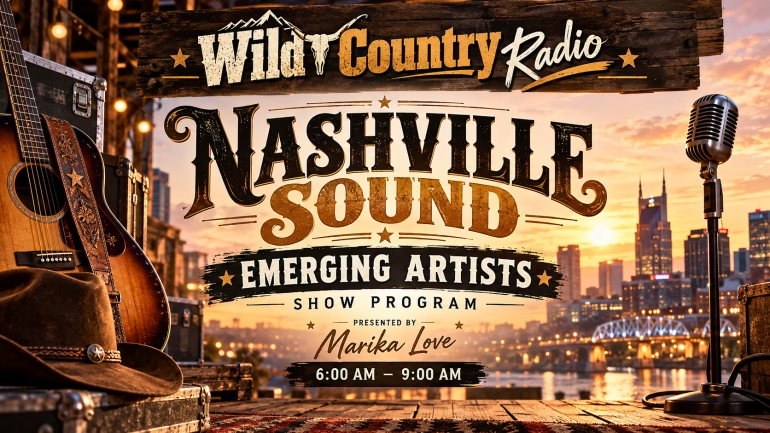
The Nashville Sound

During the late 1950s and early 1960s, producers introduced a smoother style designed to reach mainstream audiences.

Known as the Nashville Sound, it featured:

  • String orchestras
  • Vocal choruses
  • Sophisticated production
  • Pop-friendly arrangements

Legendary artists included:

  • Patsy Cline
  • Jim Reeves
  • Eddy Arnold
  • Brenda Lee

Patsy Cline’s timeless recordings such as Crazy helped country music become internationally popular.


Johnny Cash Changed Everything

Few artists have influenced country music more than Johnny Cash.

Combining country, folk, rockabilly, gospel, and blues, Cash became one of America’s most recognizable voices.

Songs including:

  • Ring of Fire
  • Folsom Prison Blues
  • I Walk the Line

remain staples of country radio worldwide.


The Outlaw Country Revolution (1970s)

By the early 1970s, many artists wanted greater creative freedom than Nashville studios offered.

This movement became known as Outlaw Country.

Leading artists included:

  • Willie Nelson
  • Waylon Jennings
  • Kris Kristofferson
  • Merle Haggard
  • David Allan Coe

Outlaw country emphasized authenticity, independent thinking, and stripped-down production.

Its influence continues to shape modern country artists today.


Country Music Goes Mainstream (1980s–1990s)

The 1980s and 1990s introduced country music to millions of new listeners worldwide.

Artists successfully blended traditional sounds with contemporary production while preserving country storytelling.

Major stars included:

  • George Strait
  • Randy Travis
  • Reba McEntire
  • Alabama
  • Dwight Yoakam
  • Vince Gill
  • Clint Black
  • Garth Brooks
  • Shania Twain
  • Faith Hill
  • Tim McGraw

The Garth Brooks Effect

Few artists changed country music more dramatically than Garth Brooks.

His arena-sized concerts, energetic performances, and crossover appeal transformed country music into a global entertainment powerhouse.


Women Who Changed Country Music

Women have always been central to country music’s evolution.

Legendary performers include:

  • Dolly Parton
  • Loretta Lynn
  • Tammy Wynette
  • Reba McEntire
  • Martina McBride
  • Faith Hill
  • Shania Twain
  • Miranda Lambert
  • Carrie Underwood
  • Lainey Wilson

These artists expanded opportunities for future generations while producing many of country music’s greatest recordings.


Country Music in the Digital Age

Technology has completely transformed how fans discover country music.

Today’s listeners enjoy:

  • Internet radio
  • Music streaming
  • Smart speakers
  • Mobile apps
  • Podcasts
  • Social media
  • Live video performances

Artists can now build worldwide audiences without relying solely on traditional radio or record labels.

Independent country musicians have never had greater opportunities to reach fans.


Today’s Country Music Stars

Modern country blends traditional influences with rock, Americana, blues, Southern rock, and pop.

Popular artists include:

  • Chris Stapleton
  • Luke Combs
  • Cody Johnson
  • Morgan Wallen
  • Lainey Wilson
  • Jelly Roll
  • Ashley McBryde
  • Kacey Musgraves
  • Kane Brown
  • Brothers Osborne

While styles continue to evolve, storytelling remains the heart of country music.


The Future of Country Music

Country music has always embraced change while honoring tradition.

Emerging trends include:

  • Americana
  • Red Dirt Country
  • Texas Country
  • Independent Country
  • Country Rock
  • Bluegrass Revival
  • Folk-Country Fusion

Streaming platforms, online radio, and digital communities continue introducing country music to new generations of fans around the world.

No matter how technology changes, audiences will always connect with songs that tell honest stories about real life.


Why Country Music Endures

For more than 100 years, country music has remained one of America’s most beloved musical traditions because it reflects universal human experiences.

Whether it’s a song about first love, family, loss, faith, small-town pride, or chasing dreams, country music speaks directly to the heart.

That timeless connection ensures the genre will continue to thrive for generations to come.


Listen to the History of Country Music on Wild Country Radio

At Wild Country Radio, every era of country music has a place. Our programming celebrates the pioneers who built the genre, the legends who defined it, and the artists carrying it into the future.

Whether you enjoy traditional country, outlaw country, bluegrass, Americana, or today’s chart-topping hits, you’ll find them all streaming 24 hours a day.

🎙️ Start listening now: https://wildcountrymusic.radio


Related Articles (Internal Linking Strategy)

Build topical authority by linking this pillar page to additional evergreen content across your website:

  • Introduction to Wild Country Radio
  • Greatest Country Songs of All Time
  • 100 Essential Country Albums
  • The Complete Guide to Outlaw Country
  • Bluegrass Music Explained
  • The History of the Grand Ole Opry
  • Country Music Hall of Fame Guide
  • The Evolution of Nashville
  • Best Modern Country Artists
  • Country Music Festivals Across America
  • Country Music News
  • Artist Profiles A–Z

Recommended External Authority Links

Strengthen credibility by linking to authoritative resources:

Written by: admin

Rate it

Wild Country Radio

FREE
VIEW