Country Music: The Wild Country Guide

By Wild Country Radio · Updated 29 October 2026

Country music is three chords and the truth: songs about work, love, faith, home and heartbreak, told plainly enough that a stadium can sing them back. This guide covers where country came from, the sounds it has picked up along the way, and who to listen to first. When you’re ready to hear it, Wild Country Radio plays country music 24/7, free.

Painting of cowboys playing guitar and fiddle on the porch of a rustic log cabin

What is country music?

Country music is American popular music that grew out of the rural South in the early twentieth century. It mixed the ballads and fiddle tunes that Scottish, Irish and English settlers brought to Appalachia with gospel singing and with the blues and banjo traditions of African American musicians. The instruments tell the story: fiddle, acoustic guitar, banjo, mandolin, and later the steel guitar and the electric Telecaster.

What holds the genre together across a hundred years of change is the song. Country lyrics are specific. They name the town, the truck, the bar and the person who left. That plain storytelling is why a George Strait ballad from 1985 and a Cody Johnson single from this year sit comfortably side by side on country music radio.

A short history of country music

1920s: the first recordings

In the summer of 1927, Victor Records producer Ralph Peer set up a makeshift studio in Bristol, on the Tennessee–Virginia line, and recorded local musicians over about two weeks. The Bristol Sessions introduced the Carter Family and Jimmie Rodgers, and Johnny Cash later called them “the single most important event in the history of country music.” (Smithsonian)

Radio makes it national

Radio carried country out of the hills. WSM in Nashville launched its WSM Barn Dance on November 28, 1925, and announcer George D. Hay renamed it the Grand Ole Opry in December 1927. The Opry still broadcasts every week. (Grand Ole Opry)

1940s–50s: honky-tonk

After the war, country moved into the bars. Honky-tonk swapped the fiddle-band sound for steel guitar, a shuffle beat and songs about drinking and heartbreak, and Hank Williams became its defining voice. (Country Music Hall of Fame)

Late 1950s–60s: the Nashville sound and Bakersfield

Nashville producers Owen Bradley and Chet Atkins smoothed country out with strings, background vocals and polished production, the Nashville sound behind Patsy Cline and Jim Reeves. (Tennessee Encyclopedia) Out in California, Buck Owens and the Bakersfield sound answered with loud, twangy Telecasters. (Country Music Hall of Fame)

1970s: the outlaws

Waylon Jennings, Willie Nelson and friends pushed back against the Nashville system and recorded their own way. Their 1976 compilation Wanted! The Outlaws became the first country album certified platinum. (American Songwriter)

1980s to now: neotraditional, superstars and crossovers

George Strait and Randy Travis brought the fiddle and steel back in the 1980s, while Alabama showed a self-contained band could top the charts. The 1990s turned country into arena music, led by Garth Brooks, Brooks & Dunn and Shania Twain. Since then the genre has kept widening: country pop from Carrie Underwood and Rascal Flatts, country rock from Jason Aldean, and genre-blending hits from Jelly Roll and Shaboozey. Our history of country music goes deeper.

Seven women country singers performing together on one stage

Types of country music

StyleSounds likeStart with
Traditional and neotraditionalFiddle, steel guitar, story songsGeorge Strait, Vince Gill, Cody Johnson
Honky-tonkBarroom shuffles and heartbreakBrooks & Dunn, Toby Keith
Nashville soundStrings, smooth vocals, polished productionPatsy Cline, Jim Reeves. Weekday mornings on Nashville Sound
Outlaw countryRough-edged and independentThe Highwaymen
Country rockSouthern rock guitars, big chorusesJason Aldean, Bailey Zimmerman. All day on Country’s Rock Daily
Country popPolished hooks, crossover hitsCarrie Underwood, Rascal Flatts
Genre-blending countryHip-hop, rock and gospel crossoversJelly Roll, Shaboozey

Where to start listening

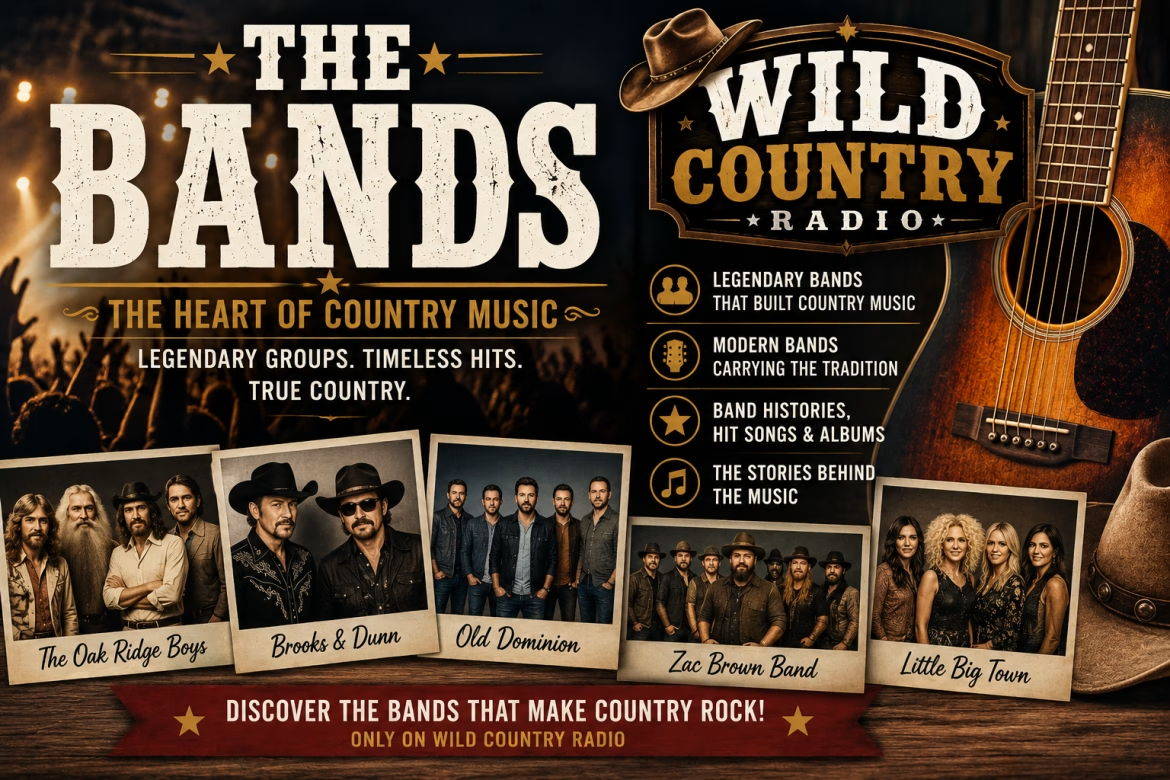
Collage of legendary country bands beside an acoustic guitar

Today’s country stars

Luke Combs, Morgan Wallen, Cody Johnson and Jelly Roll. Country music artists

Pickup truck on an open highway under a wide sky

Songs for the drive

The country anthems built for the open road. Best country road trip songs

Cheering concert crowd with a guitar and cowboy hat in the foreground

See it live

Tour dates checked every month. Country music concerts 2026–2027

Nashville: where country lives

Nashville earned the name Music City through the Opry, the Ryman Auditorium and the studios of Music Row. Today you can hear live country on Lower Broadway any night of the week. Plan a trip with our Nashville music guide and our pick of the best live music venues.

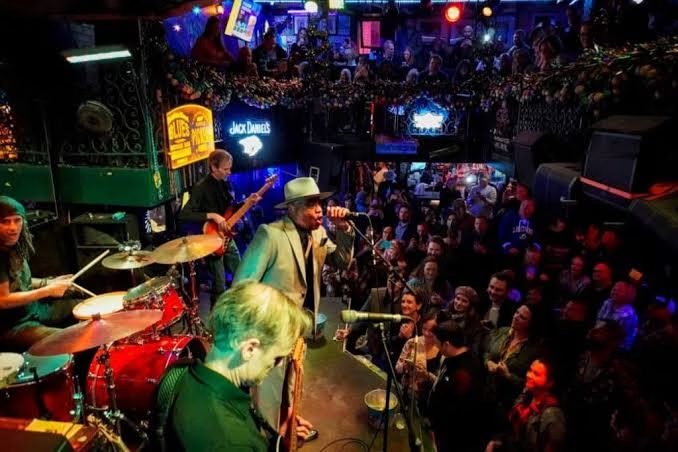
Country band playing to a packed crowd in a Nashville music bar

Country music questions

In the rural South in the early 1900s. The 1927 Bristol Sessions on the Tennessee–Virginia line are often called its first big recording moment.

It’s home to the Grand Ole Opry, the Ryman Auditorium and the Music Row studios where much of country music is recorded.

Americana draws on the same roots (folk, bluegrass, blues) but usually sits outside mainstream country radio and its charts.

Right here. Wild Country Radio streams country music 24/7, free on the web and in our apps.

Sources: Smithsonian Magazine, Grand Ole Opry, Country Music Hall of Fame, Tennessee Encyclopedia, American Songwriter (linked in the text). How we check facts: Editorial Standards. Spot an error? Tell us.

Hear country music radio, live 24/7

Wild Country Radio streams country music free, all day and all night: the Nashville Sound on weekday mornings, Country’s Rock Daily through the day, and the week’s most requested songs in the afternoon. Press play on the web, or use the iPhone and Android apps.

“Top Requests of the Week” show artwork
✕
Wild Country Radio

FREE
VIEW